Fall is the most productive season of the year in a Louisville yard, and it's the one most homeowners skip. Everything you do between mid-September and Thanksgiving pays out next April: thicker turf, cleaner beds, healthier trees, and far less work when the weather breaks.
Here's the order we work through a property, and why each step matters in this climate.
1. Get leaves off the turf before they mat
One light layer of leaves is not a problem. A wet, matted layer sitting for two weeks is. It blocks light, traps moisture against the crowns, and invites snow mold over winter. In neighborhoods with mature oaks and maples — Middletown, St. Matthews, Prospect — that usually means two or three passes, not one big cleanup in November.
Shredded leaves are a resource. We mulch-mow light drops straight back into the lawn and haul off the heavy ones.
2. Feed and overseed the lawn while it still wants to grow
September through mid-October is the best turf window of the entire year in Kentucky. Soil is warm, nights are cool, and fescue puts on real root growth. This is when overseeding actually takes, and when fall fertilization does more for next summer's lawn than anything you can apply in spring.
If a lawn is thin, compacted, or losing ground to weeds, core aeration plus overseeding right now is the single highest-return thing you can do to it. Details on how we handle this are on our Lawn & Turf page.
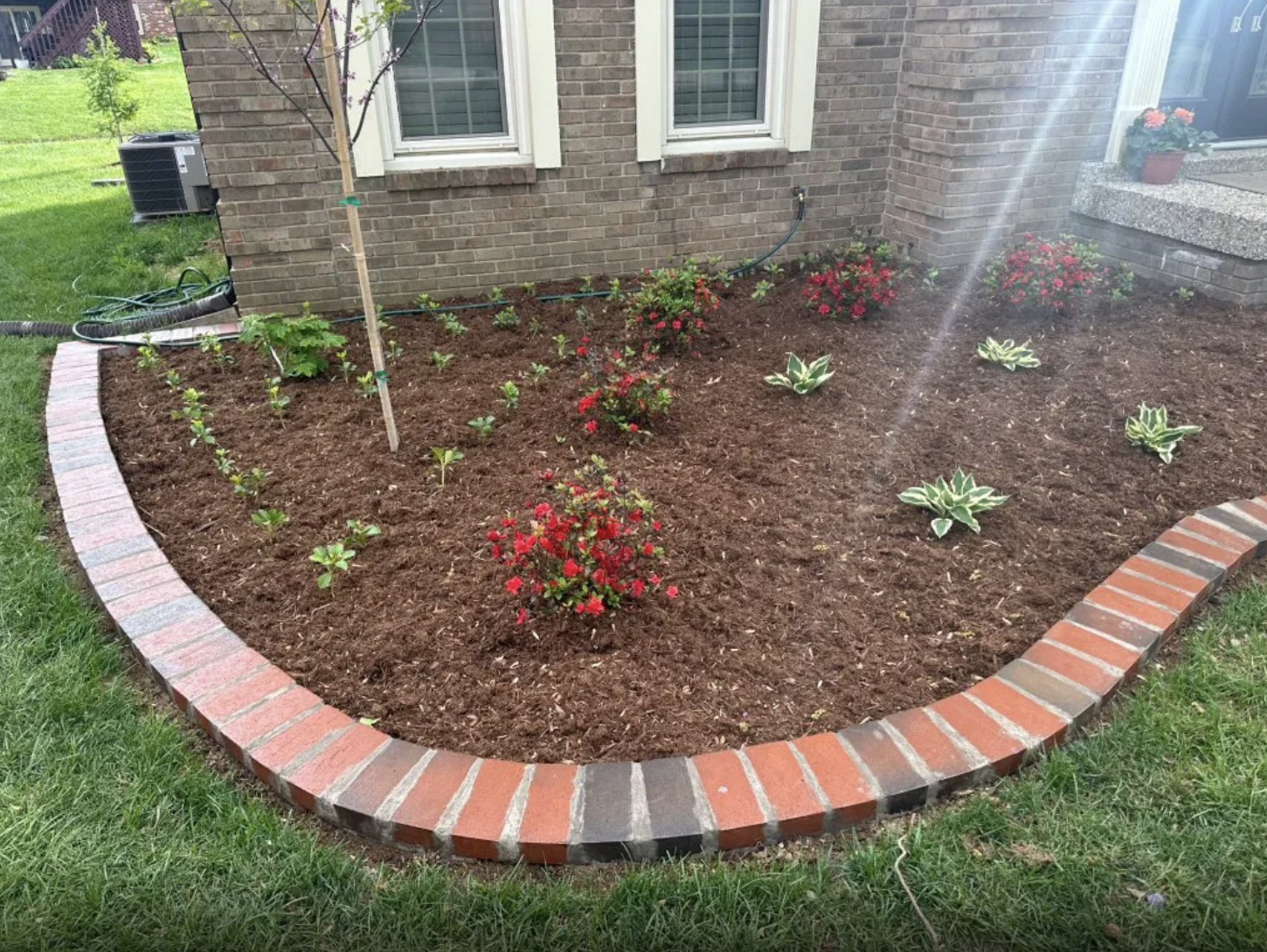
3. Cut back, weed, and re-edge the beds
Beds get cleaned in this order: pull weeds while the soil is soft, cut back spent perennials, re-cut the bed edge, then top off mulch. Cutting the edge last means the line stays crisp all winter.
We leave certain seed heads and ornamental grasses standing on purpose — they hold structure through winter and feed birds — and cut those in early spring instead.
4. Top off mulch, don't rebuild it
Mulch is insulation as much as it is looks. Two to three inches is the target, measured from the soil, not added on top of what's already there. Piling new mulch on old every year is how beds end up six inches deep, holding water, and rotting the base of shrubs. If your beds are already deep, we rake and turn what's there instead of adding more. Same rule around trees: never against the trunk.
5. Prune what should be pruned now — and nothing else
Fall pruning is easy to get wrong. Safe now: dead, damaged, or crossing limbs, anything hanging over a roof or drive, and structural cuts on dormant shade trees late in the season. Wait until after bloom next year: spring bloomers like azalea, forsythia, and lilac, which have already set next year's buds. Cutting them now trades a season of flowers for nothing.
Larger limb work over a house, a car, or a power line is a job for equipment and insurance, not a ladder. That's what our Tree Care service is for.
6. Plant while the soil is still warm
Early fall is the strongest planting window of the year here — soil is warm, air is cool, and roots establish before winter. If you've been putting off a tree, a screening row, or a bed of shrubs, this is the season to do it rather than waiting for spring. We wrote out the full timing logic in When to Plant Trees and Shrubs in Louisville.
7. Clear drainage before the freeze
Downspouts, drain grates, swales, and the low corner of the yard where water always sits. Water that has nowhere to go in December becomes ice, and ice moves pavers, heaves walls, and kills turf. Five minutes clearing a grate now saves a repair later.
8. Walk the hardscape
Look for pavers that have settled, wall blocks pushed out of line, and joints that have lost their sand. Small movement is normal; a bulge in a retaining wall or a step that rocks under weight is not, and freeze-thaw will make it worse fast. Catch it now and it's a repair. Catch it in April and it can be a rebuild. See Hardscaping for what that work involves.
The short version
If you only do three things this fall in Louisville: keep the leaves off the grass, aerate and overseed in September or early October, and clear your drainage before the first hard freeze.
If you'd rather hand the whole list off, we do seasonal cleanups across the metro — tell us about your property and we'll walk it with you.
Planning a landscape project in Louisville?
Tell us what you're thinking and we'll walk the property, talk through options, and send a written estimate.
Get a free estimate